|
View the Latest News and Updates from Green Oceans ͏ ͏ ͏ ͏ ͏ ͏ ͏ ͏ ͏ ͏ ͏ ͏ ͏ ͏ ͏ ͏ ͏ ͏ ͏ ͏ ͏ ͏ ͏ ͏ ͏ ͏ ͏ ͏ ͏ ͏ ͏ ͏ ͏ ͏ ͏ ͏ ͏ ͏ ͏ ͏ ͏ ͏ ͏ ͏ ͏ ͏ ͏ ͏ ͏ ͏ ͏ ͏ ͏ ͏ ͏ ͏ ͏ ͏ ͏ ͏ ͏ ͏ ͏ ͏ ͏ ͏ ͏ ͏ ͏ ͏ ͏ ͏ ͏ ͏ ͏ ͏ ͏ ͏ ͏ ͏ ͏ ͏ ͏ ͏ ͏ ͏ ͏ ͏ ͏ ͏ ͏ ͏ ͏ ͏ ͏ ͏ ͏ ͏ ͏ ͏ ͏ ͏ ͏ ͏ ͏ ͏ ͏ ͏ ͏ ͏ ͏ ͏ ͏ ͏ ͏ ͏ ͏ ͏ ͏ ͏ ͏ ͏ ͏ ͏ ͏ ͏ ͏ ͏ ͏ ͏ ͏ ͏ ͏ ͏ ͏ ͏ ͏ ͏ ͏ ͏ ͏ ͏ ͏ ͏ ͏ ͏ ͏ ͏ ͏ ͏ ͏ ͏ ͏ ͏ ͏ ͏ ͏ ͏ ͏ ͏ ͏ ͏ ͏ ͏ ͏ ͏ ͏ ͏ ͏ ͏ ͏ ͏ ͏ ͏ ͏ ͏ ͏ ͏ ͏ ͏ ͏ ͏ ͏ ͏ ͏ ͏ ͏ ͏ ͏ ͏ ͏ ͏ ͏ ͏ ͏ ͏ ͏ ͏ ͏ ͏ ͏ ͏ ͏ ͏ ͏ ͏ ͏ ͏ ͏ ͏ ͏ ͏ ͏ ͏ ͏ ͏ ͏ ͏ ͏ ͏ ͏ ͏ ͏ ͏ ͏ ͏ ͏ ͏ ͏ ͏ ͏ ͏ ͏ ͏ ͏ ͏ ͏ ͏ ͏ ͏ ͏ ͏ ͏ ͏ ͏ ͏ ͏ ͏ ͏ ͏ ͏ ͏ ͏ ͏ ͏
Dear Friends and Neighbors,
|
|
Welcome to October! As construction continues on the outer continental shelf and beyond, one must pause and ask: am I a true conservationist? There are many claiming to be clean, green and renewable; yet they advocate for the irreversible destruction of nature, the potential extinction of endangered species, and other far reaching efforts to alter, distort and destroy our shared oceans and the beautiful lands that filter the water that falls from the skies. What is conservation? Conservation emphasizes the protection of our natural world and can be defined as the active defense of ecosystems, wildlife, and natural landscapes from industrial-scale disruption and degradation—especially projects that threaten marine habitats, coastal integrity, and ecological balance. Conservation is rooted in the principle that true stewardship means preserving nature not for exploitation, but for its intrinsic value and the well-being of all species, including future generations means to conserve—not churn up seabeds, dig for precious metals in far away lands and commission massive instillation ships under the guise of conservation. Let’s take care to speak for those who can not— future generations of mammals and animals, plants and more. Read more about whales in the “Marine Mammal Facts” section below, or about the current state of the scallop under the “What We Are Reading” section.
|
Whales: More Than Meets the EyeTo remind, NOAA is currently investigating multiple ongoing Unusual Mortality Events (UMEs) for whales in the Atlantic Ocean, with the most critical involving North Atlantic right whales, humpback whales, and minke whales. Here are a few things that whales do for the environment and what is partially, or potentially completely lost (extinction) with the death of each and every whale. You can also read more about whales on the Green Oceans website. Feed Ocean Plants Through Their Waste
Whales dive deep to eat and come back up, releasing nutrient-rich waste that acts like fertilizer for tiny ocean plants called phytoplankton. These plants absorb massive amounts of carbon dioxide from the air. Capture Carbon in Their Bodies
Each large whale stores about 33 tons of carbon throughout its lifetime—far more than any tree. This carbon stays locked away from the atmosphere for decades. Create Deep-Sea Carbon Storage When They Die
When whales die and sink to the ocean floor, they take all that stored carbon with them, keeping it buried in the deep sea for centuries while creating underwater ecosystems. Mix Ocean Nutrients
As whales migrate and move between deep and shallow waters, they carry nutrients across vast distances, helping different ocean areas stay productive and healthy. Support the Entire Food Chain
By fertilizing phytoplankton, whales boost the foundation of ocean life. More phytoplankton means more food for fish and other sea creatures, keeping marine ecosystems thriving.
|
Westport Offshore Wind Advisory Committee MeetingThe Westport Offshore Wind Advisory Committee (OSWAC) will meet on Thursday, October 23rd at 5:30pm on the 2nd floor of the Westport Town Hall, 816 Main Road. An update on OSW developments over the past three months will be provided covering federal actions, recent court decisions and pending court cases, and an overview of the status of the various projects under construction. The main discussion topic of this session will be the cost of electricity. Massachusetts and Rhode Island have the second and third highest retail electric rates in the continental U.S. and costs continue to rise. A portion of the increase is attributable to policy-driven charges that ratepayers often do not see broken out clearly on their bills. Some of these surcharges directly support offshore wind development and related infrastructure. OSWAC member Christopher Thrasher has written several ballot initiatives addressing these rising costs. He will present on utility filings, MA Department of Public Utility proceedings, cost recovery mechanisms, and will explain how these charges are structured and what they mean for local households and businesses. There will be ample time for audience comments and questions.
|
Call to Action: Please Reach Out THIS WEEK
|
For Rhode Island, Connecticut and All Others Impacted by Revolution Wind:Call and/or email: Attorney General Peter Neronha (Rhode Island) Attorney General William Tong (Connecticut) Request that they withdraw their lawsuit against the Bureau of Ocean Energy (BOEM) Stop Work Order for Revolution Wind. Let them know you support the stop-work order for Revolution Wind, and that you are opposed to their suit to overturn it. Let him know that the BOEM is right to examine issues that were not properly considered in the permitting process of Revolution Wind, including: National security issues Impacts on fisheries Violations of the Outer Continental Shelf Lands Act (OCSLA), National Environmental Policy Act (NEPA), Endangered Species Act (ESA), Marine Mammal Protection Act (MMPA), Clean Water Act (CWA), and National Historic Preservation Act (NHPA). The omission of a Decommissioning Bond to pay for removal of the turbines at the end of their lifespan
For Everyone:Please call and/or email your state and federal representatives, as well as Secretary of the Interior Doug Burgum, EPA Administrator Lee Zeldin and the White House public comment line. Let them know that you oppose offshore wind and support their efforts to stop it. Doug Burgum, Secretary of the Interior Lee Zeldin, EPA Administrator White House Public Comment Line
|
Green Oceans is a group of volunteers who have engaged expert legal counsel. We look forward to counting you as one of our supporters, or repeat donors! With the year's end coming, please consider making a donation now.
|
|
Green Oceans is a 501(c)(3) non-profit organization. Donations are tax deductible to the full extent permitted by law.
|
What We Are Reading“The Scallop Fishery and Offshore Wind” by Green Oceans co-founder Dr. Elizabeth (Lisa) Quattrocki Knight, M.D., Ph.D. Until recently, the scallop fishery was a management plan success story. Between 1980-1994 technological advances drove the scallop fishery to collapse. NOAA intervened successfully, limiting catches, open areas, days at sea, crew size, and gear restrictions. By 2001, the fishery had achieved a “rebuilt” status. NOAA continued to regulate the industry in a cautious and conservative manner, allowing the biomass to rise and by 2017 the fishery had reached a peak, suggesting full recovery. That trajectory has now reversed. Since 2019, scallop biomass and landings have fallen sharply. Neither climate change, nor documented diseases can explain this precipitous decline. The only new known stressor in the region has been the onset of seismic surveys and offshore wind construction. Read more. Environmental TipHalloween is around the corner! Below are a few ideas to help make your holiday more sustainable. Remember—small efforts like these can make a big difference for the planet: Use natural—not plastic—items to decorate, like pumpkins, gourds, or autumn leaves. Decorate with reusable items such as string lights or fabric banners. Make eco-friendly costumes (using sheets, recycled boxes and old clothing and materials from home is a great start!) Swap costumes with friends or shop at thrift stores to avoid purchasing single-use outfits. Use reusable bags, buckets, or pillowcases for collecting treats instead of single-use plastic. Compost your pumpkins after use, or donate them to animal shelters or wildlife organizations that accept them
Bonus autumn tip: as the days get shorter and the air turns crisp, try leaving the car behind and taking a brisk walk or bike ride through your neighborhood, local park, or a favorite trail. You might spot birds flocking up for winter or squirrels gathering acorns—plus, every step you take instead of driving helps keep the air and our coastal habitat cleaner for everyone.
Newsletter Nightcap“In the hands of humanity lies the sacred duty to nurture, not deplete; to protect, not plunder. Our legacy is not measured in conquest but in conservation.”
—Anonymous “To harm nature is to harm yourself. To care for it is to care not just for yourself, but for the entire universe.” ―Michael Bassey Johnson “What obligation is more binding than to protect the cherished, to defend whoever or whatever cannot defend itself, and to nurture in turn that which has given nourishment?“
—John Seed
|
Thank You to Our Supporters!
Green Oceans is a broad coalition of citizens who are committed to protecting and preserving our coastal waters. Whether you have made a financial contribution, volunteered, helped spread awareness about our mission, attended a seminar, or posted a yard sign—we thank you for your support!
Onward,
Lisa, Charlotte, Barbara, Katie, Mike and the Green Oceans Team
|
Sign Our PetitionWe now have over 3,000 signatures from 30 States and nine countries, but we need more! Please distribute the link to family, neighbors, and friends to help gather more signatures.
|
VolunteerWe value your skills! Sign up for our volunteer directory.
|
Host a Zoom PresentationThe Green Oceans team often holds small, focus-group presentations. Please consider hosting a Zoom to inform your neighbors and friends.
|
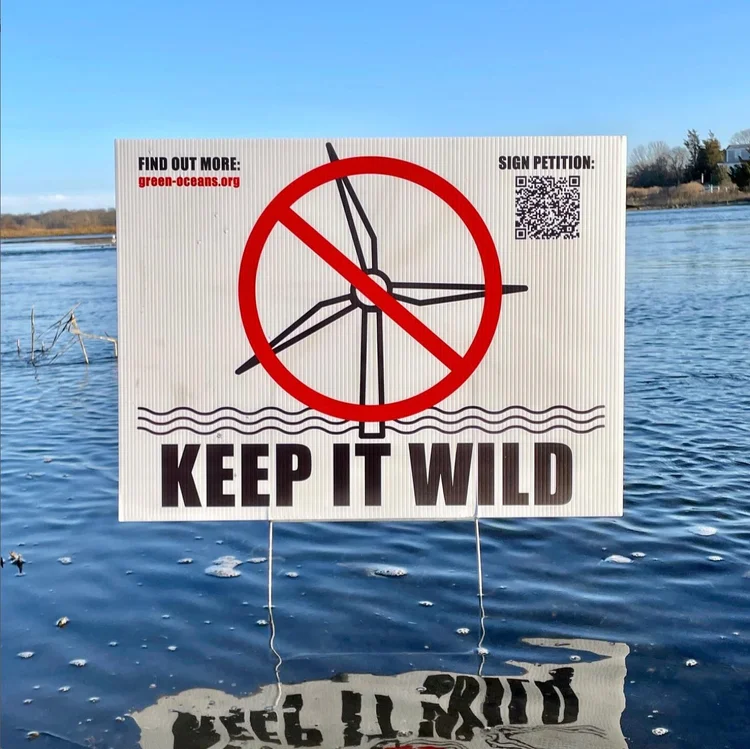
Post a Yard SignSupporters have requested over 3,500 yard signs.
|
|
Green Oceans is a non-partisan, grassroots group of community members dedicated to preserving the health of the ocean and the biodiversity it sustains founded in January 2023.We strive to protect the ocean by informing the public about imminent threats, including the impact of offshore wind on the marine ecosystem.
|
|
Visit our website, follow us on social media, or contact us directly via email for more information.
|
|
|
|